Aesthetic Legs – Why Most Beginners Train Them Wrong
Leg training has a reputation problem. On one side you have the people who skip legs entirely because they only care about their upper body. On the other side you have the people who treat leg day as a test of character, loading a barbell with as much weight as possible and squatting until they cannot walk for three days. Neither of these approaches builds aesthetic legs, and for most beginners chasing a better looking physique, both represent a significant waste of time.
The goal here is not the biggest legs possible. It is not a bigger squat number. It is legs that look proportional, defined, and genuinely good, in shorts, in trousers, and alongside an upper body that has been trained with the same intention. That is a different goal to the ones most leg training is designed around, and it requires a different approach.
What Aesthetic Legs Actually Look Like
Before getting into how to train for them, it is worth being specific about what the goal actually is.
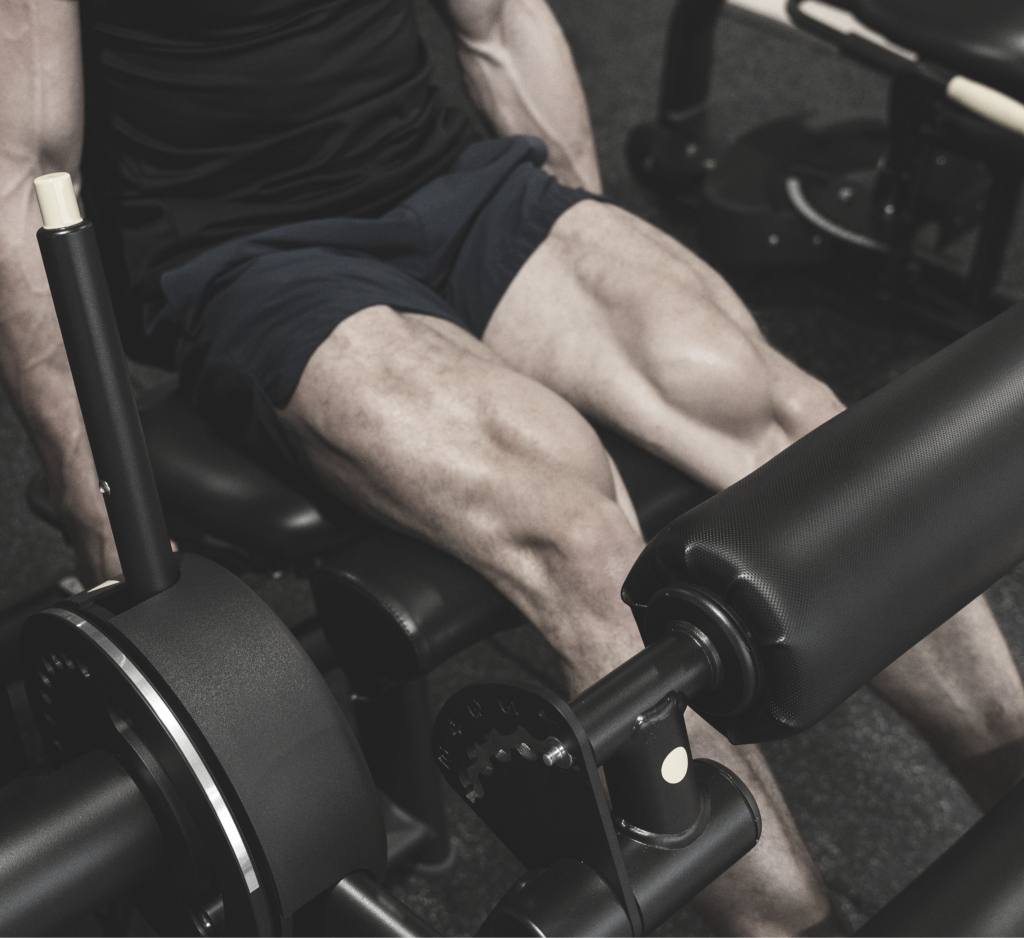
Aesthetic legs have visible quad development with a sweep that creates shape on the outer thigh when viewed from the front. They have hamstrings with enough development to create a clear separation between the back of the thigh and the leg overall. The calves are proportional to the upper leg rather than being completely undeveloped sticks below a reasonably built thigh. And the whole thing is lean enough that the shape of the muscle is visible rather than being obscured by excess body fat.
This is not the same as the legs of a competitive powerlifter or a bodybuilder who specialises in lower body development. It is proportional, athletic, and functional. The kind of legs that look good in any context rather than being so large they create fit issues with every pair of trousers you own.
The muscles primarily responsible for this look are the quadriceps, particularly the outer sweep of the quad, the hamstrings, and the calves. Each of them needs to be trained with some intention, not just loaded as heavily as possible and hoped for the best.
Why Heavy Squats Alone Do Not Build Aesthetic Legs
The squat is probably the most celebrated exercise in gym culture, and it is a genuinely effective movement. But treating it as the only leg exercise you need, which is extremely common among beginners, does not produce aesthetic legs.
Here is why. The squat is a compound movement that distributes the load across multiple muscle groups simultaneously. The quads, hamstrings, glutes, and lower back all contribute to a squat. Because the load is shared, no single muscle group receives the concentrated stimulus that isolation work provides. A heavy squat builds general leg mass and strength, but it does not specifically target the outer quad sweep, it does not create significant hamstring definition, and it does nothing for the calves.
There is also a technique issue that affects most beginners. When the weight gets heavy, form tends to break down in ways that reduce the quad stimulus even further. The torso tips forward, the glutes and lower back absorb more of the load, and the knees track inward. The result is a movement that taxes the lower back and hips significantly without producing the quad development the beginner assumed they were getting.
Squats belong in leg training. The problem is not the exercise itself but the assumption that it covers everything.
Building the Quad Sweep
The outer portion of the quadriceps, sometimes called the quad sweep or the vastus lateralis, is what creates the visible shape on the side of the thigh that makes legs look athletic and developed when viewed from the front or side.
This part of the quad is most effectively targeted by movements that keep the knee tracking forward with a narrow stance and a deep range of motion. Hack squats, leg press with a low and narrow foot position, and Bulgarian split squats all load the outer quad more directly than a conventional wide stance squat.
The leg extension is the most direct isolation movement for the quadriceps and deserves more credit than it typically gets in beginner programmes. While it is not a replacement for compound leg movements, adding leg extensions at the end of a leg session specifically targets the quad through its full range of motion in a way that compound movements do not. For someone trying to build visible quad definition and sweep, leg extensions are a useful addition.
Range of motion matters significantly for quad development. Partial reps on leg press or squat variations load the top portion of the movement where the muscle is least challenged. Full range of motion, where the quad reaches a deep stretch at the bottom, produces considerably more muscle development over time. If the weight being used requires you to cut the range of motion short, the weight is too heavy.
Hamstrings Are Almost Always Undertrained
Most beginner leg programmes are heavily quad dominant. Squats, leg press, and maybe some lunges cover a lot of quad work while the hamstrings receive minimal direct attention.
The hamstrings run along the back of the thigh and serve two main functions. They bend the knee, which is what leg curls train, and they extend the hip, which is what Romanian deadlifts and similar hip hinge movements train. Building aesthetic hamstrings requires both functions to be trained because each one develops a different portion of the muscle.
Hip hinge movements like Romanian deadlifts and stiff leg deadlifts develop the upper hamstring and the area where the hamstring meets the glute, which creates the curved separation visible between the glute and the back of the thigh when the muscle is developed. Leg curls, both lying and seated, develop the belly of the hamstring and create thickness through the middle of the back of the thigh.
For aesthetic purposes, the upper hamstring and the visible separation at the top of the thigh is what makes legs look complete from the rear. Most beginners who squat heavily but never do direct hamstring work have well developed quads but a flat, underdeveloped back of the leg that kills the overall aesthetic regardless of how good the front looks.
Including one hip hinge movement and one leg curl variation per leg session covers both functions and gives the hamstrings enough direct stimulus to develop alongside the quads.
Calves and Why They Matter More Than People Think
Calves are the most skipped muscle group in beginner training, and the gap between developed calves and completely underdeveloped calves is more visually significant than most people realise until they start paying attention to it.
Underdeveloped calves make the entire lower leg look like a stick below a reasonably built thigh. From the side, the silhouette of the leg has no shape to it. In shorts, the lack of calf development is immediately obvious and undermines the overall aesthetic of the legs regardless of how good the quads and hamstrings are.
The calves are also one of the more stubborn muscle groups to develop, which is part of why people give up on training them. They are used constantly during daily walking and standing, which means they are adapted to high volumes of low intensity stimulus and need to be pushed harder than most muscles to produce growth.
Seated calf raises and standing calf raises both have a place. The seated version targets the soleus, which sits underneath the gastrocnemius and adds thickness to the lower leg from the side. The standing version targets the gastrocnemius, the more visible muscle that creates the shape at the back of the calf.
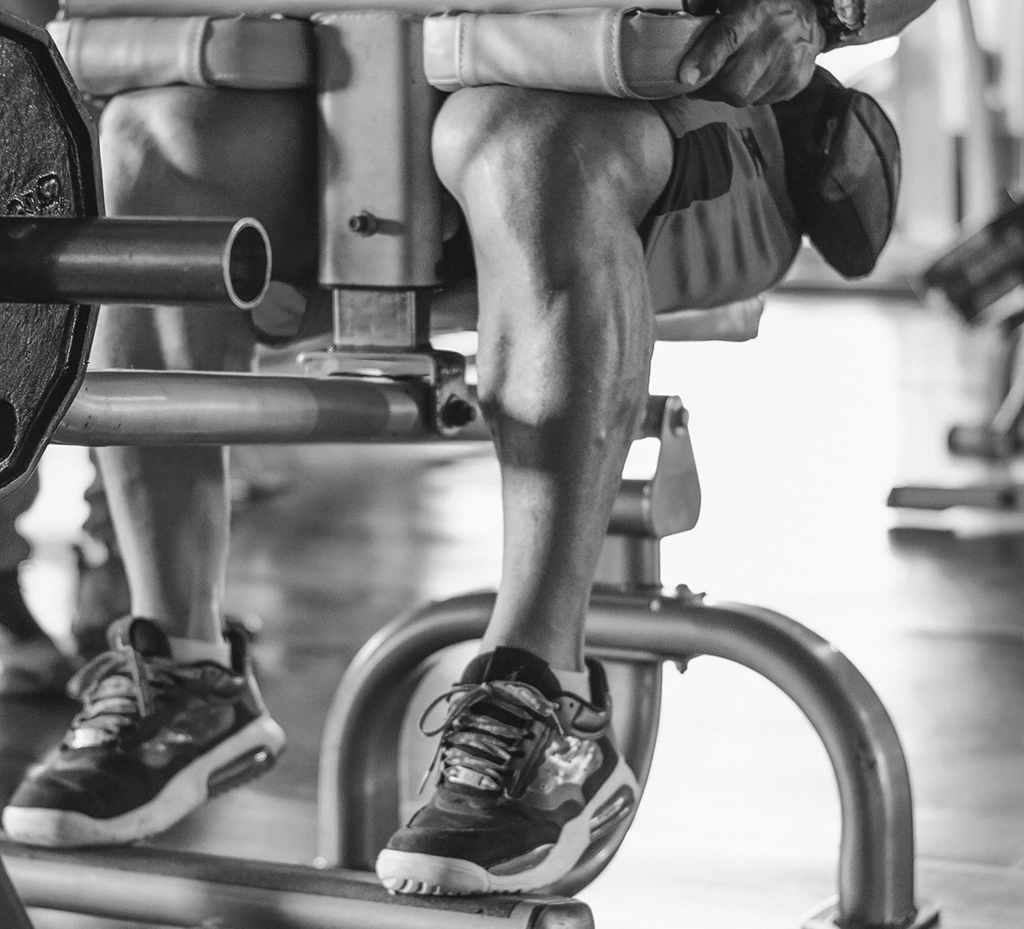
High rep ranges work well for calves because of their natural endurance adaptation. Sets of 15 to 25 reps with a pause at the bottom to get a full stretch produce better results than heavy sets of eight, which is how most beginners approach calf training when they train them at all. The stretch at the bottom of each rep is important. Partial calf raises that only cover the top half of the movement are a very common mistake that significantly reduces the effectiveness of the exercise.
How to Actually Structure Leg Training
For someone training legs twice per week, which is the right frequency for most beginners, here is what a practical structure looks like.
The first session focuses more on quads and includes a compound movement like hack squat or leg press as the primary exercise, followed by leg extensions for direct quad isolation, and a hamstring movement like Romanian deadlifts. Calves get trained at the end with two to three sets.
The second session shifts the emphasis slightly toward hamstrings and includes a squat variation as the primary compound movement, followed by lying or seated leg curls as the primary hamstring focus, and lunges or Bulgarian split squats for additional quad and glute work. Calves again at the end.
This structure ensures both quads and hamstrings receive direct attention in each session, with the emphasis rotating slightly between the two. It also guarantees that calves are trained twice per week rather than being an afterthought that gets skipped when sessions run long.
Proportional Legs Within the Overall Physique
One thing worth addressing directly is how much leg development is actually appropriate for someone whose primary goal is an aesthetic physique overall.
Extremely large legs relative to the upper body look unbalanced, just as an extremely developed upper body sitting on completely undeveloped legs looks unbalanced. The goal is proportional development that makes the whole physique look complete rather than optimised for one half and neglected on the other.
For most beginners focused on upper body aesthetics, two leg sessions per week with the structure described above is sufficient to build proportional legs that complement the upper body development rather than lagging behind it. You do not need to treat legs as a speciality unless they are genuinely falling significantly behind everything else.
The mindset shift that most beginners need is away from treating legs as either a cultural obligation to be suffered through or an irrelevant body part to be skipped. Legs that are trained with intention, with the right exercises and the right emphasis on the muscles that create an aesthetic shape, contribute directly to the overall physique in a way that neglected legs never will.
Train them because they are part of the blueprint, not because someone told you that you have to.