How to Build a V-Taper From Scratch
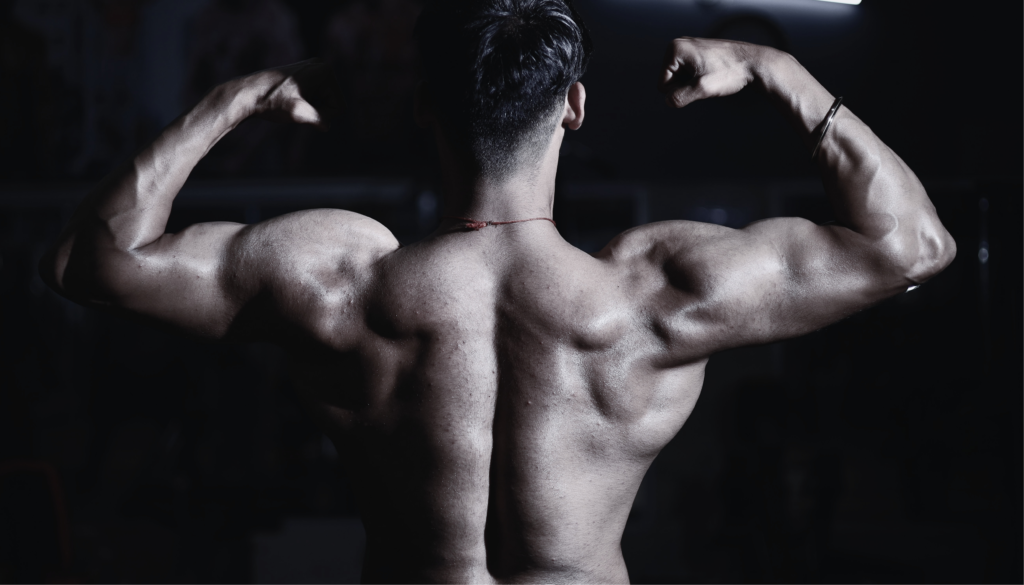
There is a reason the V-taper is the most recognisable shape in fitness. Wide shoulders, a broad upper back, and a waist that looks narrow by comparison. It is the silhouette that makes someone look athletic in a t-shirt, fills out a jacket, and reads as genuinely built rather than just big. It is also the shape that most beginners are chasing, even if they would not describe it in those terms.
The problem is that most beginners do not train for it directly. They bench press, they curl, they do some rows, and they hope the shape comes together on its own. It usually does not. The V-taper is built through deliberate targeting of specific muscles, and if those muscles are not being trained properly, the shape does not develop regardless of how hard everything else is being worked.
This article covers what the V-taper actually is, which muscles create it, how to train each of them, and what most beginners get wrong along the way.
What Actually Creates the V-Taper
The V-taper is not one thing. It is a combination of width at the top and relative narrowness at the bottom, and it is created by developing specific muscles while keeping body fat at a level that does not obscure the contrast between the two.
The muscles responsible for the top half of the shape are the lats, the side delts, the rear delts, and the upper back in general. The lats create width when viewed from the front by flaring out from the torso below the armpit. The side delts add width at the shoulder, extending the top of the V further outward. The rear delts and upper back add thickness and roundness that makes the shoulder look complete from every angle.
The bottom half of the equation is the waist. You cannot train your waist narrower, but you can keep body fat low enough that it does not add width around the midsection, and you can build the upper body wide enough that the contrast between the two creates the illusion of a narrower waist even if the waist itself has not changed.
This is an important point. A lot of beginners assume the V-taper is something only people with naturally narrow waists can achieve. The reality is that building the upper body wide enough changes the visual ratio regardless of your natural structure. Proportion is relative. A wider frame at the top makes everything below it look narrower by comparison.
The Lats Are the Foundation
If the V-taper is the goal, the lats are the first priority. No other muscle contributes as directly to the width of the upper body when viewed from the front, and no other muscle is as consistently undertrained in beginner programmes.
The lats are a large, flat muscle that runs from the lower and mid back up to the armpit, where it inserts into the upper arm. When developed, they flare outward visibly below the armpit and create the sweep that forms the sides of the V shape. When underdeveloped, the torso looks straight from shoulder to hip with no taper at all.
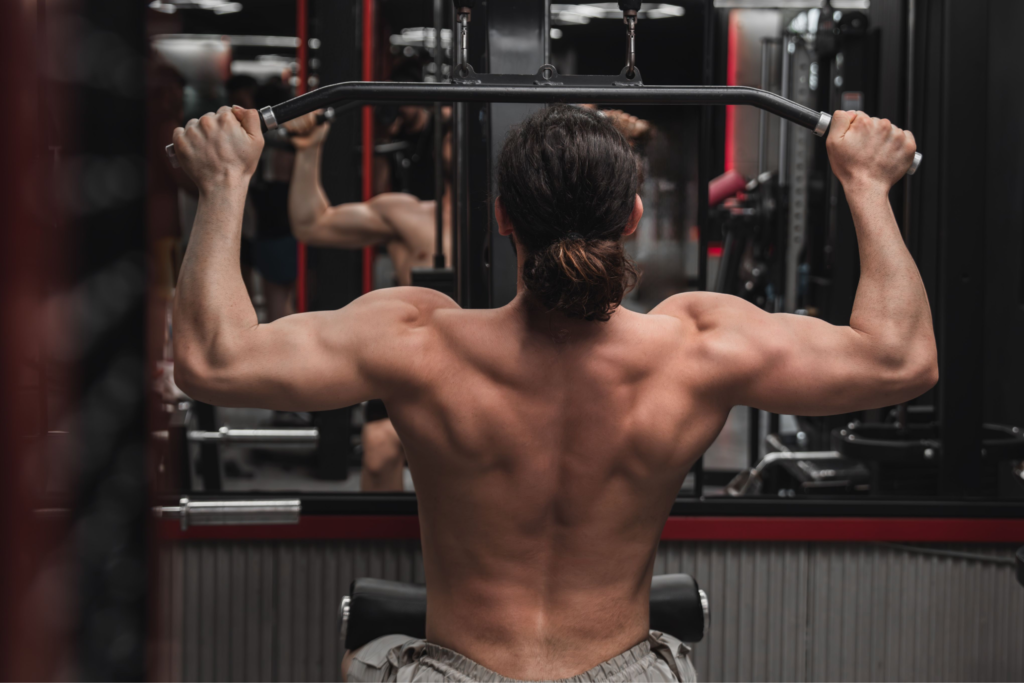
The exercises that build lat width are vertical pulling movements. Pull-ups and lat pulldowns are the primary ones. Rows build back thickness but do not create the same width, and this distinction matters enormously for beginners who tend to row heavily while neglecting vertical pulling entirely.
Pull-ups are the more effective of the two when performed correctly, but they require enough strength to move your own bodyweight. For beginners who cannot yet perform pull-ups, assisted pull-ups or lat pulldowns are the starting point. The goal with both is to feel the lats doing the work rather than the biceps and upper traps taking over.
To get the lats actually working during a pulldown or pull-up, think about pulling your elbows down and back toward your hips rather than pulling with your hands. The hands are just hooks. The elbows drive the movement. This one cue makes a significant difference to how much of the exercise the lat actually absorbs.
Straight arm pulldowns are another exercise worth including for lat development. The arms stay straight throughout the movement, which removes the bicep from the equation almost entirely and forces the lat to do the work on its own. For beginners struggling to feel their lats during pull-ups or pulldowns, straight arm pulldowns are one of the best ways to build that connection.
Side Delts Extend the Width
The lats create width through the torso. The side delts extend that width further at the shoulder, pushing the top of the V outward and creating a broader silhouette overall.
As covered in other articles on this site, the side delt is one of the most undertrained muscles in beginner programmes because it does not get loaded by pressing movements. The front delt gets worked every time you press anything. The side delt needs direct isolation work to develop properly.
Lateral raises are the primary exercise. Dumbbell lateral raises, cable lateral raises, and machine lateral raises all work. The key in all of them is keeping the weight light enough to control the movement properly, leading with the elbow rather than the hand, and feeling the burn in the side of the shoulder rather than the trap or the front delt.
For the V-taper specifically, side delt development is the variable that most directly extends the visual width of the top of the shape. Lats and side delts trained together create a silhouette that is genuinely difficult to achieve with either one alone.
Rear Delts Complete the Shoulder
The rear delt sits at the back of the shoulder and is responsible for pulling the arm backward. It does not add much visible width from the front, but it fills out the shoulder from the side and back view and plays a significant role in how the shoulder looks from every angle other than directly head-on.
Beyond aesthetics, the rear delt matters for structural balance. The front delt and chest are both internal rotators of the shoulder. If they are significantly stronger than the rear delt, the shoulder gets pulled forward into a rounded position. This not only looks worse but makes pressing movements less comfortable over time and limits shoulder development overall.
Face pulls, reverse cable flies, and bent-over dumbbell reverse flies are the main exercises. Face pulls are particularly effective because they also train the external rotators of the shoulder and pull the shoulder back into a more upright, healthier position. Two to three sets of rear delt work per session is enough. It does not need to dominate the programme, but it needs to be there consistently.
Upper Back Thickness Adds to the Complete Picture
Width and thickness are two different qualities in the back, and both contribute to the V-taper in different ways. Width, built through vertical pulling, creates the silhouette from the front. Thickness, built through horizontal pulling, creates depth and density that makes the back look complete from the side and rear.
Rows are the primary thickness builders. Barbell rows, dumbbell rows, cable rows, and chest-supported rows all build the mid and upper back musculature that sits between the shoulder blades and adds to the overall density of the upper back.
The mistake most beginners make is doing too much rowing relative to their vertical pulling. A back that is thick but not wide does not create the V-taper. It just creates a blocky torso with limited taper. The ratio of vertical pulling to horizontal pulling should lean toward vertical pulling for anyone whose primary goal is the V-taper shape. A rough guide is to match your rowing volume with at least equal volume of vertical pulling, and ideally slightly more.
What Most Beginners Get Wrong
The most common mistake is building a programme around pressing movements and assuming the back will take care of itself. Bench press, overhead press, and dips are popular because they are satisfying to progress on and the muscles they build are visible in the mirror. The back is less immediately visible, so it gets less attention.
The result is a physique that looks fine from the front when flexed in a mirror but has no actual width or depth when viewed in clothing or from any other angle. The V-taper does not develop from the front. It develops from training the muscles that create width and thickness from behind.
The second mistake is neglecting the shoulder isolation work that extends the width at the top. Pressing builds the front delt. Pull-ups and pulldowns build the lats. But the side delt, which extends the top of the V outward beyond what either of those movements can create, gets no meaningful stimulus from either. Without deliberate lateral raise work, the shoulders remain narrow regardless of how developed the pressing and pulling muscles become.
The third mistake is expecting the shape to appear without keeping body fat at a reasonable level. The V-taper is a visual effect created by proportion and contrast. Even significant lat and shoulder development can be obscured by excess body fat around the midsection that reduces the contrast between the upper body width and the waist. This does not mean you need to be extremely lean, but it does mean that body composition is part of the equation alongside the training.
How to Structure the Training
For someone building the V-taper from scratch, the priority order looks like this. Vertical pulling comes first, meaning pull-ups or lat pulldowns in every upper body session with enough volume to actually drive lat development. Lateral raises come next, trained at least twice per week with real focus on technique and feeling the side delt work. Rows follow to build back thickness, matched in volume to the pulling work but not exceeding it. Rear delt work rounds everything out at the end of sessions.
This does not require a completely separate programme. It requires making sure these movements appear in your training with enough frequency and volume to actually produce adaptation, rather than being treated as accessories that get cut when sessions run long.
The V-taper is built over months, not weeks. Lat development in particular is slow and requires consistent, patient work before the width becomes clearly visible. The beginners who build it are the ones who understand which muscles matter, train them with intent, and give the process enough time to produce a real result.
The shape is achievable for almost anyone willing to train for it deliberately. Most people just never do.